Rate the coral and report bleaching
Three quick questions about the reef, what each step of the scale means, and when to leave it blank.
Using DIVR2 min read
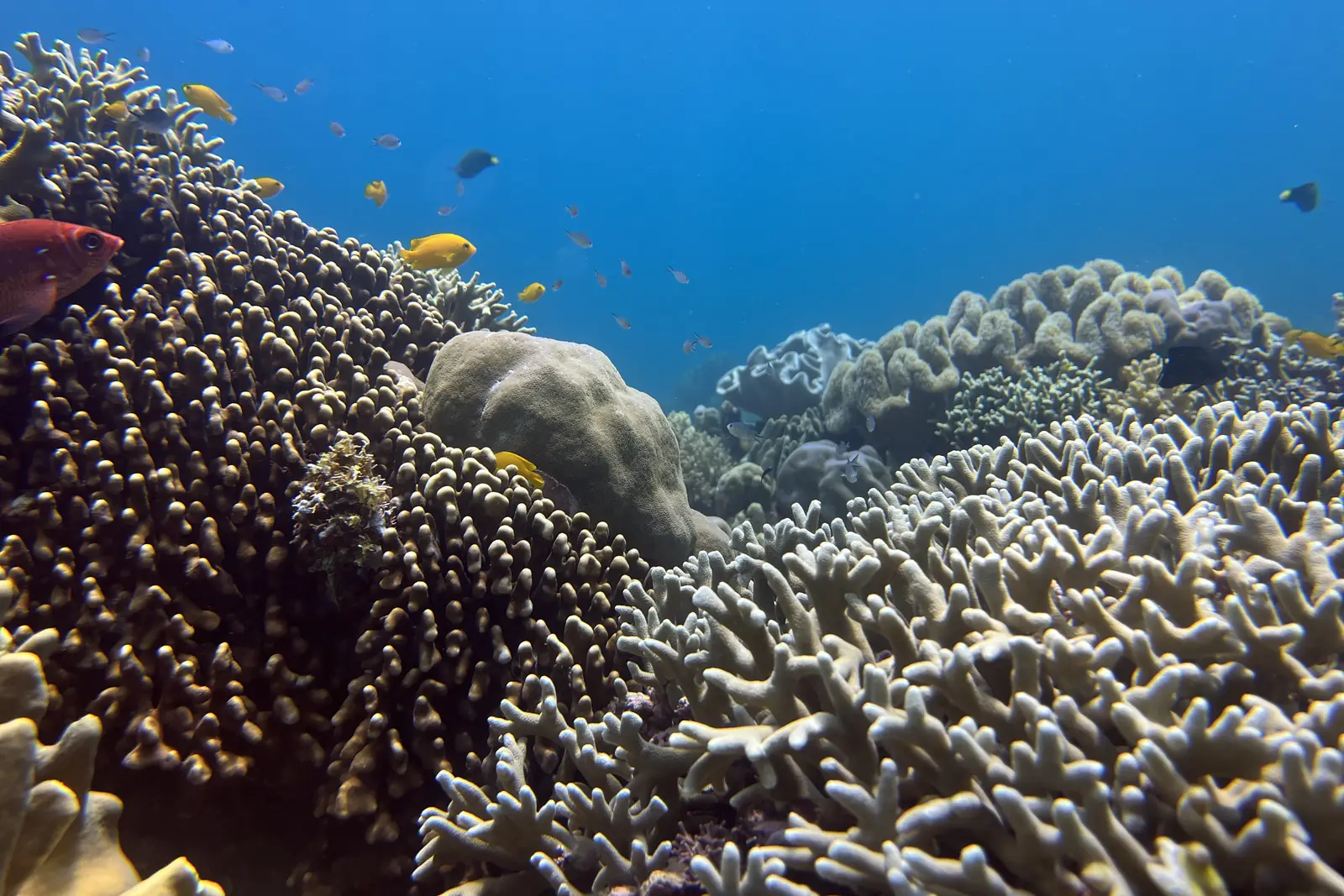
Every dive over coral is a look at how that reef is doing. DIVR asks three short questions about it. Answered on many dives, at the same sites, over months, they show how a reef is changing in a way no single survey can.
Where to find it
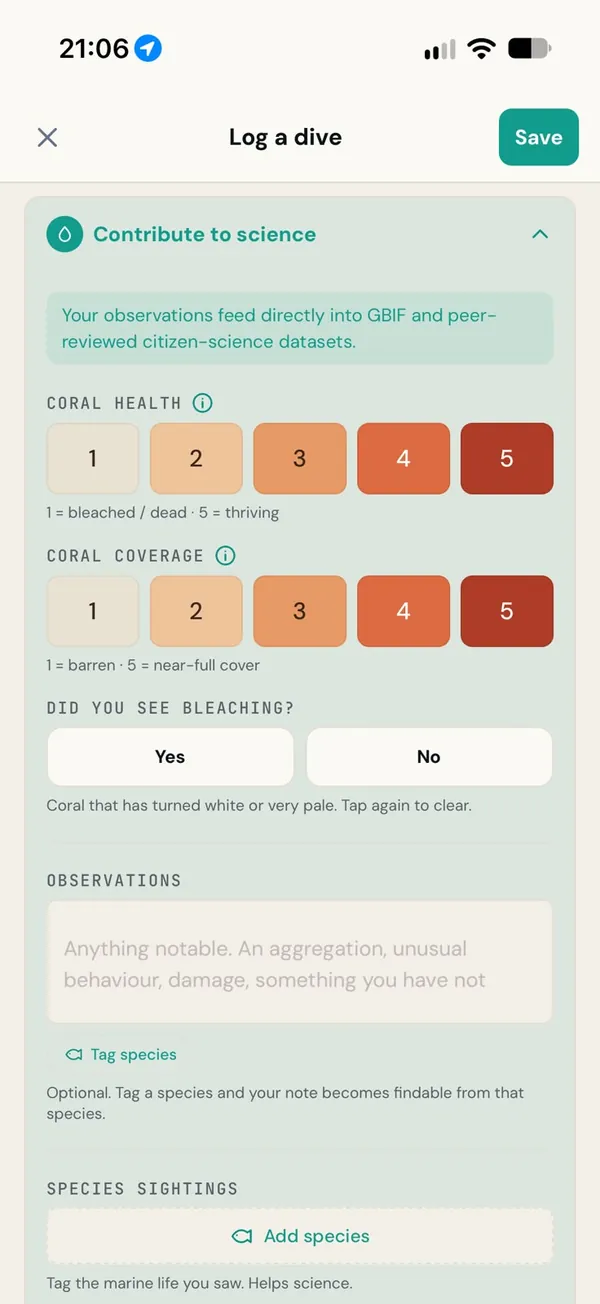
In the Log a dive form, open Contribute to science. The first three questions are about the reef: Coral health, Coral coverage and Did you see bleaching? After you save, your answers show on the dive page under Reef assessment.
Coral health, 1 to 5
Coral health asks how the living coral looked. The hint under the scale sums it up: 1 = bleached / dead · 5 = thriving. The info icon next to the label opens a reference with a picture for each step.
- 1
Bleached or dead
Most of the coral you saw was white, or dead and overgrown.
- 2
Mostly unhealthy
More unhealthy coral than healthy.
- 3
Mixed
A real mix of healthy and unhealthy.
- 4
Mostly healthy
Most coral looked healthy, with some damage or paling.
- 5
Thriving
Full colour, clean surfaces, no obvious damage.
Coral coverage, 1 to 5
Coverage is a different question: how much of the bottom was coral at all, healthy or not. A reef can be sparse and thriving, or dense and struggling, so rate the two separately.
- 1
None / bare substrate
Sand, rock or rubble, with no coral to speak of.
- 2
Sparse, less than 25%
Coral here and there, less than a quarter of the bottom.
- 3
Moderate, 25-50%
A quarter to half of the bottom is coral.
- 4
High, 50-75%
Half to three quarters.
- 5
Full / dense, 75%+
Coral almost everywhere you looked.
Did you see bleaching?
Answer Yes if you saw coral that has turned white or very pale. Answer No if you looked and did not. If you picked by mistake, tap the same answer again to clear it.
This question is asked after both scales on purpose. By then you have thought about the reef twice, and a yes or no means more. It is also the one answer that matters most in a warm year, because bleaching can appear within weeks and a quick yes from many divers shows where it is happening.
How to rate well
- Rate the dive as a whole, not the best or the worst corner of it.
- If there was no coral, or you were not looking, leave the scales alone. A blank is honest; a guess is noise.
- Some corals are naturally pale or cream. Bleaching is coral that has lost the colour it normally has.
- Rate the same way every time. Your own ratings, compared over many dives, are more useful than any single one.
To learn what each step looks like in the water, read Reading a reef: what coral health looks like.