A live record of your reef, built by the divers already on it.
DIVR turns the dives your guests, students and rangers already make into data you can use: which species, how often, at which site, and how the coral is doing.
Free for marine parks, for good. Two accounts for dive centers: a free one that counts, and a paid one that measures.
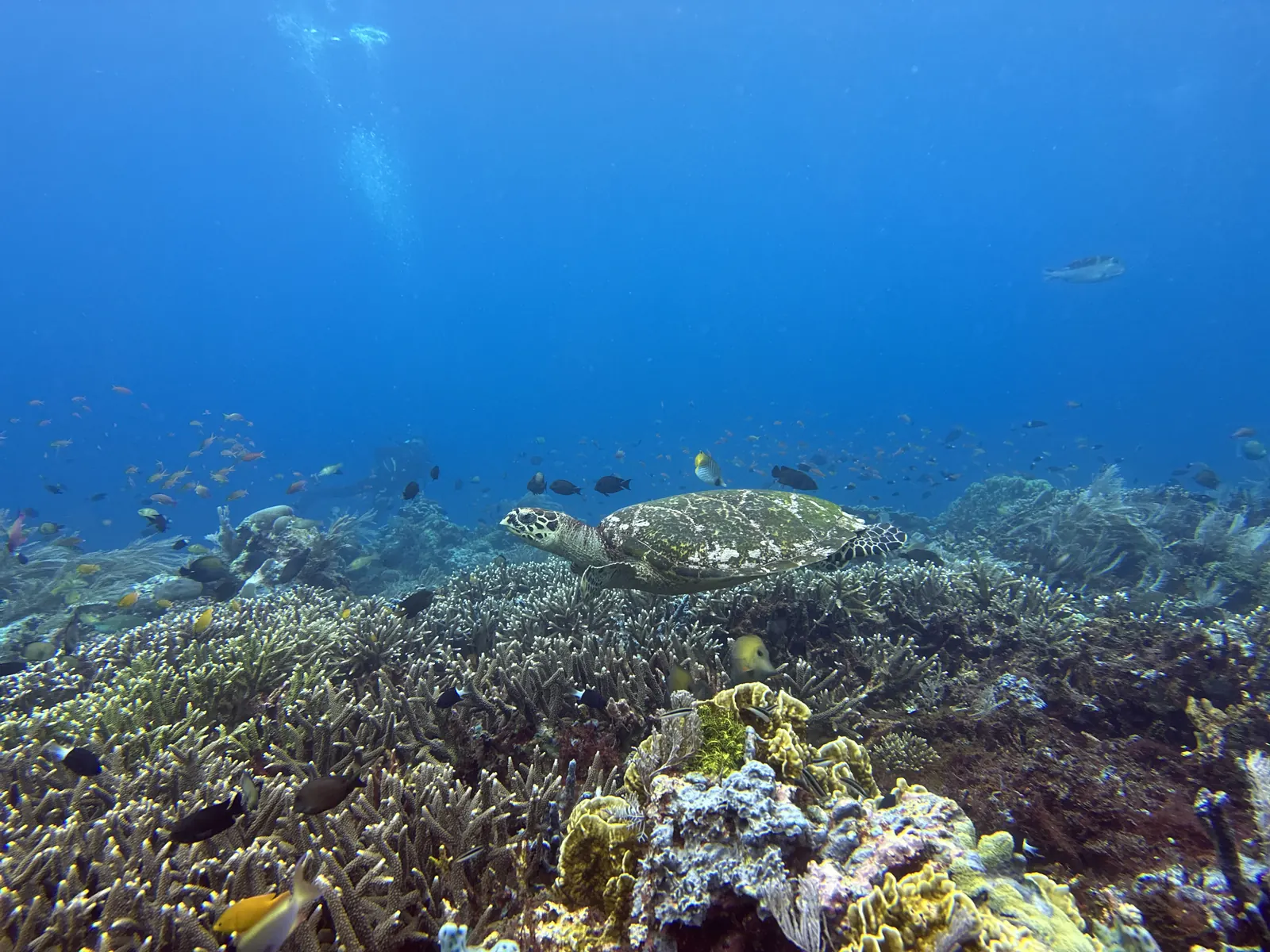
- Turtles: seen on 19 of the last 24 logged dives here
- Coral condition: mostly healthy, stable this season
A survey tells you what was there. DIVR tells you what is there.
A transect round is a snapshot, once a year if the budget allows. Dives happen every day. Each one logged at your sites adds species, coral condition and notes to one continuous record, checked against the World Register of Marine Species and kept in Darwin Core, the format researchers already use.
- 0
- dive sites already mapped, in 143 countries
- 0
- species a diver can log, every one WoRMS-checked
- 0
- logged dives a site a month, and frequency becomes readable
- 0
- marine parks running a pilot
For dive centers: the number, not the badge
“We usually see turtles here” is a claim. “Turtles on 19 of the last 24 logged dives at this site” is evidence, and your own guests produce it, one logged dive at a time. Every center says it cares about the reef. With DIVR you can show the number.
- Your divers log, you get the record: they pick your center in the log form, and offline on the boat is fine
- Briefings from real frequency: what was seen at this site this month, instead of what the laminated card says
- Every dive counts twice: once for you, once for the marine park and the open databases, with the diver's consent
Your house reef
Last 24 logged dives, this season
- Turtles19 of 24
- Eagle rays7 of 24
- Lionfish2 of 24
Example record. Yours is built from your own divers' logs.
Community Science account
Free, for good
For any dive center, whether or not a park near you takes part. Totals only, never a breakdown by species or site.
- Your divers tag your center when they log
- Your totals: dives, sightings, coral ratings, distinct species
- A public center page, and a listing here as a contributing center
- Dives reach the park at your sites and, with the diver's consent, EMODnet Biology and OBIS
Operator account
Paid, billed yearly. Founding rate for the first 20 centers, locked for life.
Everything in the free account, plus the rates: what your divers see, how often, at which site, this season.
- Per-species, per-site frequency you can publish
- Change over time: bleaching starting, lionfish arriving, a species going quiet
- Reef notes from your own guests, searchable
- Site briefings built from real frequency instead of folklore
- Exports and a monthly report for your marketing
- The founding operator mark on your public page
Free is a total. Paid is a rate. The moment a number carries a species, a site and a date range, it belongs to the Operator account.
For marine parks: free, permanently
That is a decision, not a launch offer. The parks that most need coverage have the least budget, and a manager who can see the data is what makes every operator's numbers worth trusting. So the park gets the whole picture at no cost.
- Every consented dive at your sites, by site and by month, against the ten-dive threshold
- Species frequency and change, with your listed groups shown as present, absent or unrecorded
- Coral condition on one fixed 1 to 5 scale, bleaching as yes, no or not asked
- Sightings verified by reviewers you name, not by us
- Sensitive sites masked to a grid cell in everything public
- Diver names never reach the park: the park view is anonymised
- Darwin Core export for OBIS, GBIF and EMODnet Biology, and a monthly report
Piloting with


How it starts
1
We set up your page
10,038 dive sites are already on the map, so yours probably are too. We add your logo, a page for your center or park, and a login for the dashboard.
2
Your divers tag you when they log
One tap in the log form. Offline on the boat is fine, it syncs later. A card by the rinse tank does most of the reminding.
3
The record builds itself
Around ten logged dives a site a month is enough to start reading frequency. Parks see everything at their sites. Centers see their totals, Operator accounts see the rates.



Already on DIVR
Every listed park and center has a public page. Dives tagged to a center count towards its totals.
Marine parks 2



Questions centers and parks ask
Short answers on accounts, access and where the data goes.

The Community Science account is free, permanently, for any dive center. The Operator account is paid and billed yearly. The first twenty centers get a founding rate that stays fixed for as long as they keep the account. Ask us for the founding offer.
Because the rate is the product. A total (dives, sightings, coral ratings) shows that your divers take part. A rate (green turtles on 19 of the last 24 logged dives at one site) is what you can put on a briefing board or a booking page, and that is what the Operator account is for.
They log the dive as they would anyway and pick your center in the form. Divers who already use DIVR find your center in the search. New ones download the app for free, no credit card.
No. Sightings belong to the divers who logged them. You can display the numbers, never change them, and the same record goes to the marine park and, with the diver's consent, to the open databases. That is what makes the number worth quoting.
Nothing changes for you. The free account is not tied to a park. Your divers' records still reach EMODnet Biology and OBIS with their consent, and if a park joins later its managers see the history from day one.
Because the parks that most need coverage have the least budget, and because a park manager who can see the data is what makes the operators' numbers trustworthy. It is a decision, not a launch offer, and it does not depend on how many operators near you pay.
Park managers see every consented dive at the park's sites, by site and by month, with diver names removed. Dive centers see their own totals. No public page on DIVR shows operator-attributed frequency.
Species names are matched to the World Register of Marine Species before they are stored. Coral condition uses one fixed 1 to 5 scale, the same in every dive. Sightings can be verified by reviewers the park names, and outliers are flagged rather than averaged away.
In your dashboard first. With the diver's consent, each record also leaves as a Darwin Core archive to OBIS and GBIF through EMODnet Biology, under an anonymous diver ID. DIVR is an official EMODnet Associated Partner.
Sites a park marks as sensitive are masked to a grid cell in everything public, on the map and in the export. The exact records stay with the park.
An hour or two with us on a call: your sites, your logo, your logins. Most dive sites are already on the map, so it is usually a matter of confirming them.
Put your center on DIVR
Leave an email and we set up your Community Science account together. One message from Joep, no newsletter.
Manage a marine park?
Every pilot so far started with one email. Tell us which park and which sites, and we take it from there.