A question
A species list or a short protocol for your sites. One call, then we build it into the dive log.
- Your time
- One call and a list
- You get
- Answers from every diver who logs there, seen and not seen
DIVR is a free dive log for recreational divers. Give us a species list or a short protocol, and divers at your sites answer it every time they log a dive. The records come back to you in Darwin Core, with effort and the species they looked for and did not see.
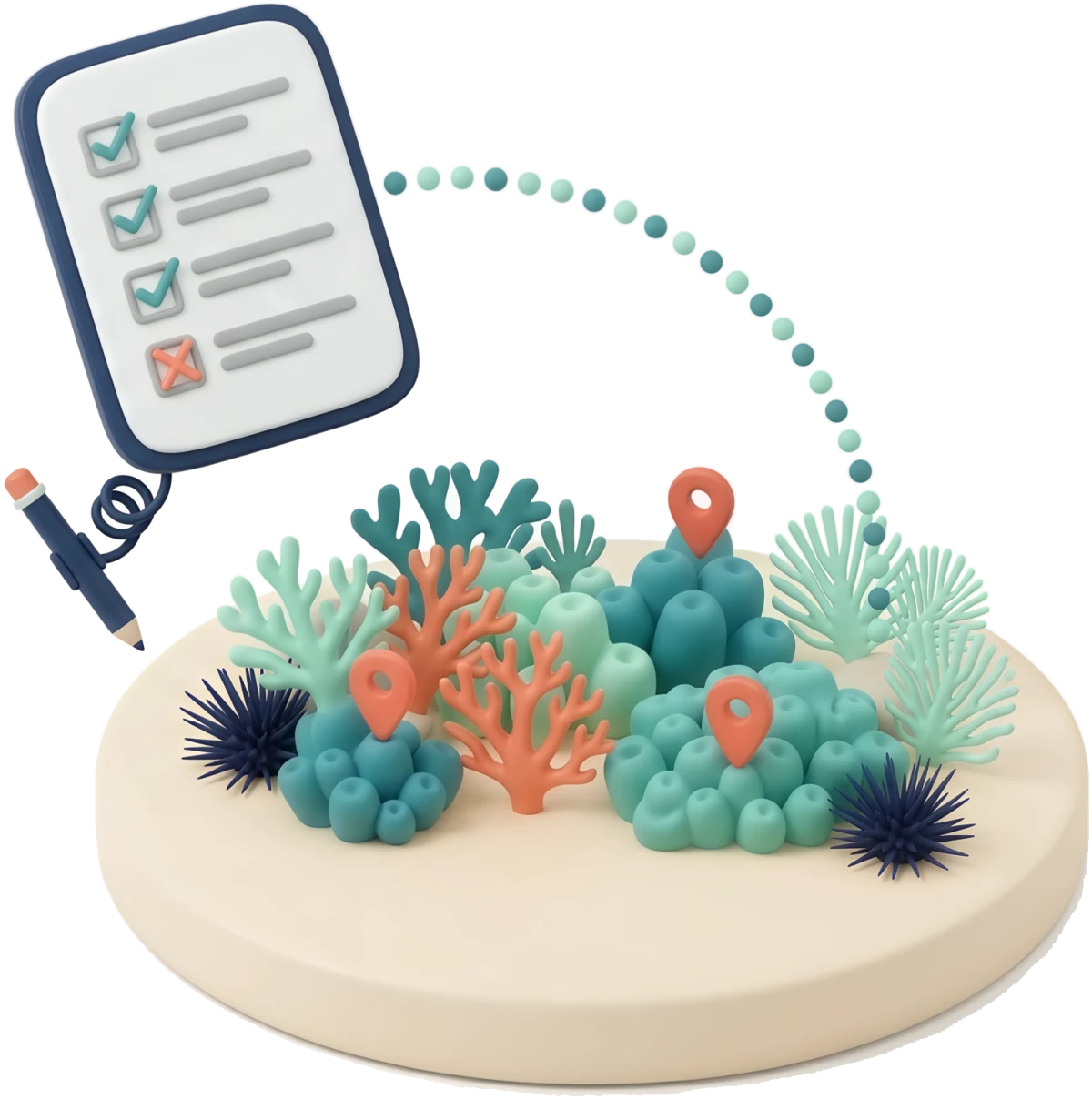
Pick one, or all three. Each takes little of your time and changes what divers record.
A species list or a short protocol for your sites. One call, then we build it into the dive log.
Check photo records in your species group. Agree with the diver, or suggest the right name.
Tell us whether the records work for your analysis and what is missing. We change the protocol, you keep your method.
Writing a proposal? DIVR can join as the data collection partner, with the app, the export pipeline and the EMODnet partnership already in place. Ask about a joint proposal
Every logged dive becomes an event and every species an occurrence, in Darwin Core, with names checked against WoRMS. This one comes from a dive at The Bridge, Sint Maarten, in October.
event + occurrence, Darwin Core
Same dive: 4 species seen, 4 looked for and not seen. Each of the eight is its own record.
A survey day takes a boat, a team and a permit, and covers a handful of transects. Recreational divers are at those sites all year, with dive computers that record time and depth. DIVR turns what they see into records you can analyse.
Opportunistic data has limits. We would rather you hear them from us.
Divers tend to log dives where something notable was seen, so rates run high and trends are the safer read. That caveat travels on every record.
Each dive has one observer. An identification is the diver's own until someone verifies it, and every record says which it is.
Coverage follows dive tourism. Before you spend any time, we tell you what exists for your region.
We are early. The first dataset for EMODnet Biology, OBIS and GBIF is being prepared; until then we share data on request. See the roadmap
01
Thirty minutes about your sites, your species and what you want to know.
02
We add your list to the dive log for every diver at those sites.
03
Dive centres and marine parks there get their divers logging.
04
Darwin Core exports whenever you need them, and publication to EMODnet Biology, OBIS and GBIF.
Divers own their logs. The records they share are published under CC BY 4.0, so you can use them with attribution.
Every published dataset carries a citation and a DOI. Until the first one is out, cite the extract we send you.
Yes: everything divers chose to share in your region, as one Darwin Core extract. We tell you honestly how much that is first.
Sharing is off until a diver turns it on, and records leave without their name.
Your region and what you want to know. Joep replies with what DIVR has there today and what divers could collect for you.